The National Telecommunications and Information Administration (NTIA) has issued a new Notice of Funding Opportunity (NOFO), opening applications for a grant program offering up to $53 million to develop, test and commercialize a secure architecture for an AI-enabled Radio Access Network (RAN).
The program, dubbed “Solutions for AI-Native RAN,” is the fourth NOFO issued under the Public Wireless Supply Chain Innovation Fund (PWSCIF). The NTIA noted that the effort aligns with its legal responsibilities under the Fiscal Year 2021 (FY21) National Defense Authorization Act (NDAA), along with an executive order on Promoting the Export of the American AI Technology Stack.
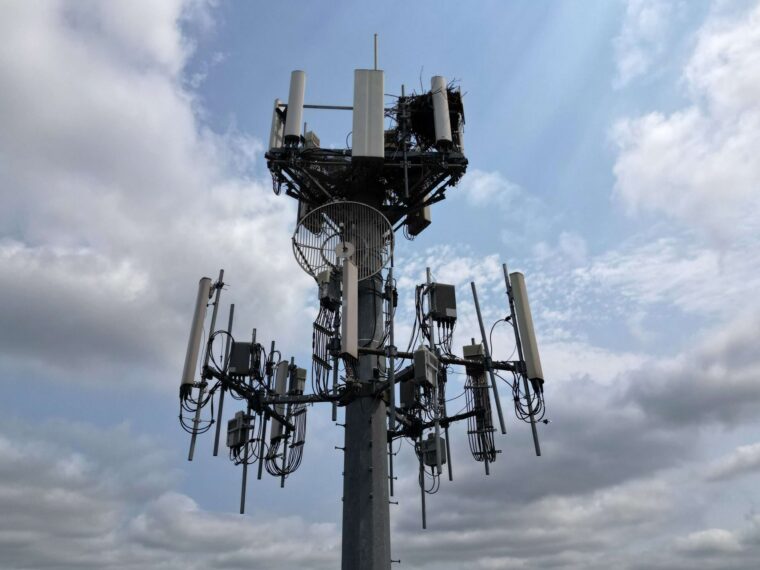
The RAN is the part of a mobile network that connects phones and other devices to the network over the air. This includes infrastructure such as the radios, antennas and related gear that handle that traffic.
Today most of that equipment comes from just a few large suppliers. According to the NTIA, that lack of competition raises prices, weakens supply chains and makes it hard for newer companies to break in. On top of this, the NTIA notes that some of those suppliers may carry national security concerns.
Open RAN is the technical alternative that the fund promotes, which includes building networks from interchangeable parts that follow shared standards. This enables an operator to mix equipment from several suppliers instead of buying a whole system from one. AI-native RAN, the focus of this funding round, goes a step further by designing the network with AI built into its foundation from the start, rather than adding it later.
The NTIA anticipates that future networks, including 6G, will rely on AI to operate more efficiently. The agency is largely using this round to prove that the technology works before those networks arrive.
Given these needs, the NOFO asks applicants to address four key areas in their proposals. The core requirement is to build a powerful, secure computing setup that can run both AI work and everyday mobile network traffic on the same shared equipment.
Applicants will also be expected to connect the concept to a real-world business case, meaning a service that the AI-native design renders possible. The idea is to create a scenario in which a company could sell and export this service, rather than just a technical proof of concept.
As part of the process, selected applicants will then have to prove the idea works in the field by running a live demonstration. By the end of the project timeline, that means delivering a working hardware prototype with beta-level software, tested in a real-world setting that runs live AI and mobile traffic at the same time.
The fourth and final requirement is a security plan. Applicants must build cybersecurity into the design, development and operation of the solution. The specifications must be in line with recognized federal frameworks such as the NIST Cybersecurity Framework and the NIST AI Risk Management Framework.
As for funding, the NTIA may award up to $53 million in total for this round, with up to $25 million allocated per project. Applicants may request more than the $25 million cap if they provide good reason, though they may not seek more than $50 million in total federal funding.
Each applicant must also cover at least half of the total project cost through its own cash or in-kind contributions, a share that the NTIA calls the cost match. This means federal dollars can pay for no more than 50% of a project’s total cost.
The NOFO also notes that applicants must be based principally in the U.S., though they can subcontract partners from other countries as needed, as long as those partners are not tied to restricted countries such as China or North Korea. All project work, however, must take place in the U.S. or its territories.
This funding round marks the latest for the PWSCIF, which Congress authorized under the FY21 NDAA. The CHIPS and Science Act of 2022 then funded it at about $1.5 billion in total. So far, the fund has committed $550 million of that money across 35 awards under its first two rounds, allocating funding for testing labs and the general commercialization of open radio units.
As for the round’s timing, the application window opened July 14 and closes Sept. 9, 2026. The NTIA will host a NOFO 4 Industry Day on July 29 to walk applicants through the opportunity. From there, the agency expects to award grants on a rolling basis starting in the fall.
Funded projects will then run for up to 18 months, with the possibility of extensions of up to a year.
Photo by Giant Asparagus from Pexels
For more of the latest from the expansive government marketplace, check Government Market News daily for new stories, insights and profiles from public sector professionals. Check out our national contracting newsletter here.
The post NTIA opens applications for $53M AI-RAN grant program appeared first on Government Market News.